Fellowship Summary: The Fellowship project will help build a community of activists interested to develop and contribute to a report on progress towards the Sustainable Development Goals (SDGs) in Belarus.
Updates coming soon!

Fellowship Programme
Country
Area of Interest
Topic

Updates coming soon!
| Country | Belarus |
| The scope of | |
| Type of solution | |
| The technology used | |
| The budget development decisions | 0 |
Updates coming soon!
| Country | Ukraine |
| The scope of | |
| Type of solution | |
| The technology used | |
| The budget development decisions | 0 |
Updates coming soon!
| Country | Ukraine |
| The scope of | |
| Type of solution | |
| The technology used | |
| The budget development decisions | 0 |
Updates coming soon!
| Country | Ukraine |
| The scope of | |
| Type of solution | |
| The technology used | |
| The budget development decisions | 0 |
Updates coming soon!
| Country | Ukraine |
| The scope of | |
| Type of solution | |
| The technology used | |
| The budget development decisions | 0 |
Updates coming soon!
| Country | Ukraine |
| The scope of | |
| Type of solution | |
| The technology used | |
| The budget development decisions | 0 |
Grigor’s project was focused on exploring and enhancing youth participation in policy development and decision-making in Armenia. Its cornerstone is the publication of a bilingual Armenian-English Research Report “Youth Participation in Policy Development and Decision-Making”. (Download the Research Report in English here and in Armenian here). This comprehensive report sheds light on the political and civic involvement of young people at both the community and state levels. It identifies key issues and provides 22 recommendations for addressing gaps and needs, targeting national and local authorities, international organizations, and political parties.
The project engaged a wide range of stakeholders, including youth workers, youth policymakers, and national authorities responsible for youth, who were interviewed to gather valuable insights. Additionally, Grigor and his colleagues reached out to approximately 200 young people through an online survey and conducted five focus groups involving 50 participants in total, including young people and policymakers. This collaborative effort ensured that diverse perspectives were incorporated into the research. Furthermore, Grigor took a study trip to Brussels to learn about evidence-based youth policy development and implementation best practices.
The impact of the work is already evident, as its recommendations have been considered during the drafting of the Law on Youth and the Youth Policy Strategy and Action Plan of Armenia. Furthermore, the Armenian Progressive Youth NGO will utilize the methodology developed within the project to conduct the same study annually, monitoring changing patterns and emerging trends.
| Country | Armenia |
| The scope of | |
| Type of solution | |
| The technology used | |
| The budget development decisions | 0 |
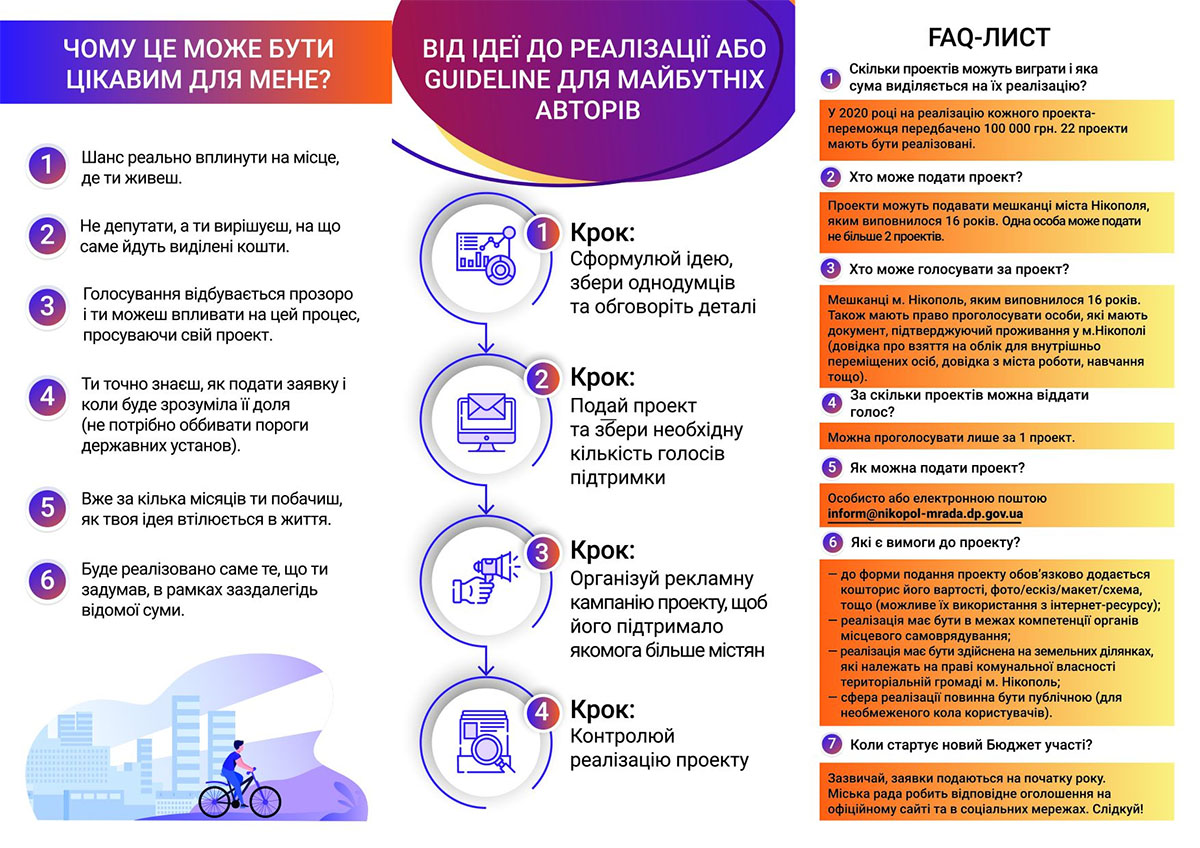
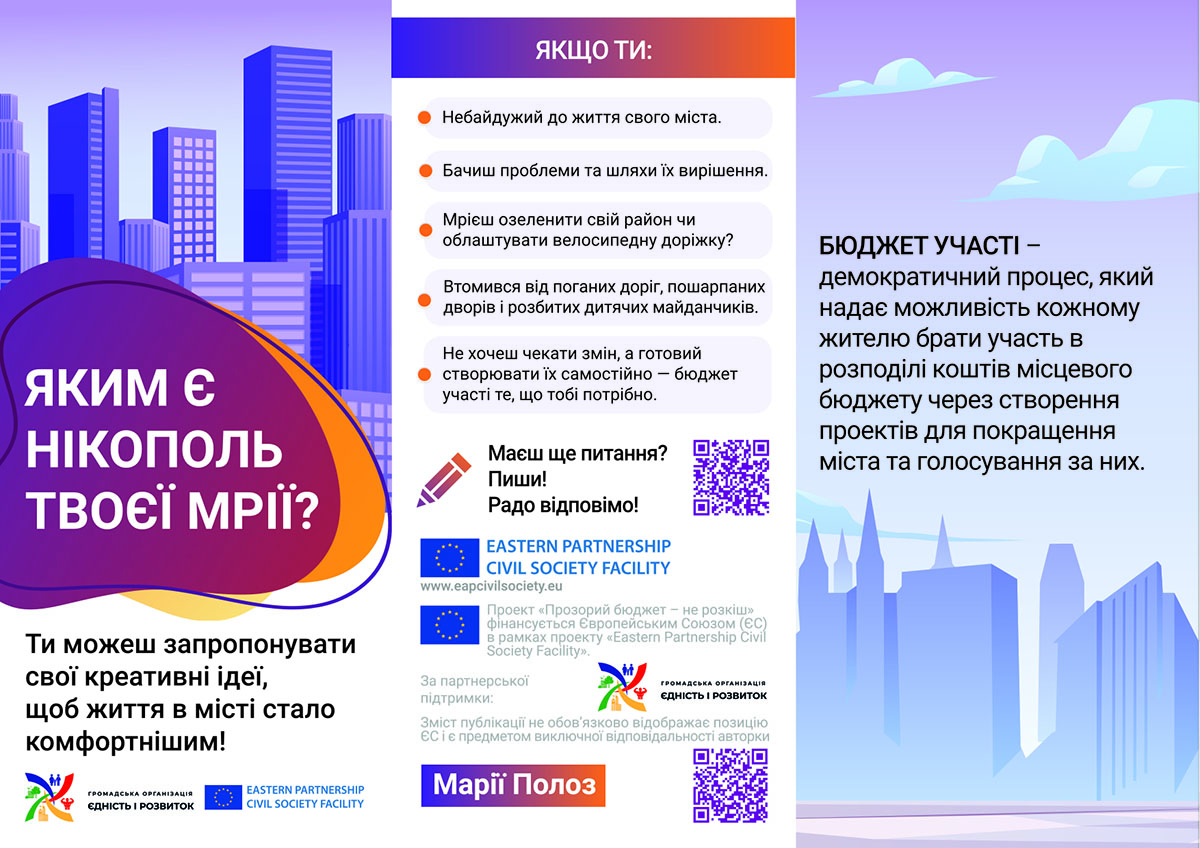
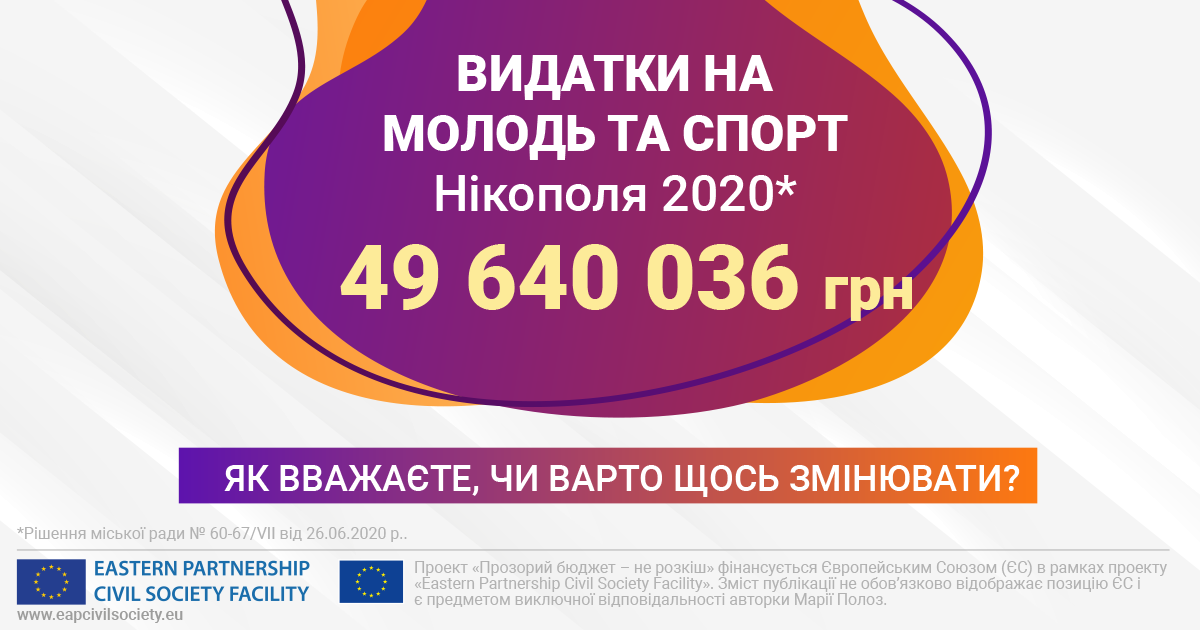
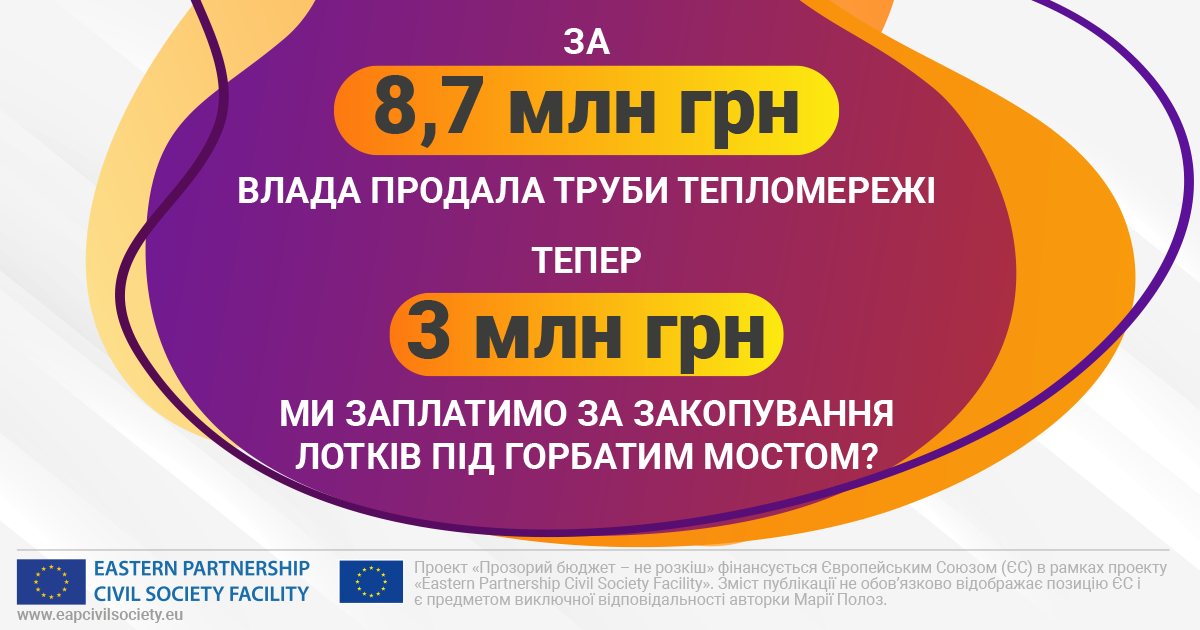
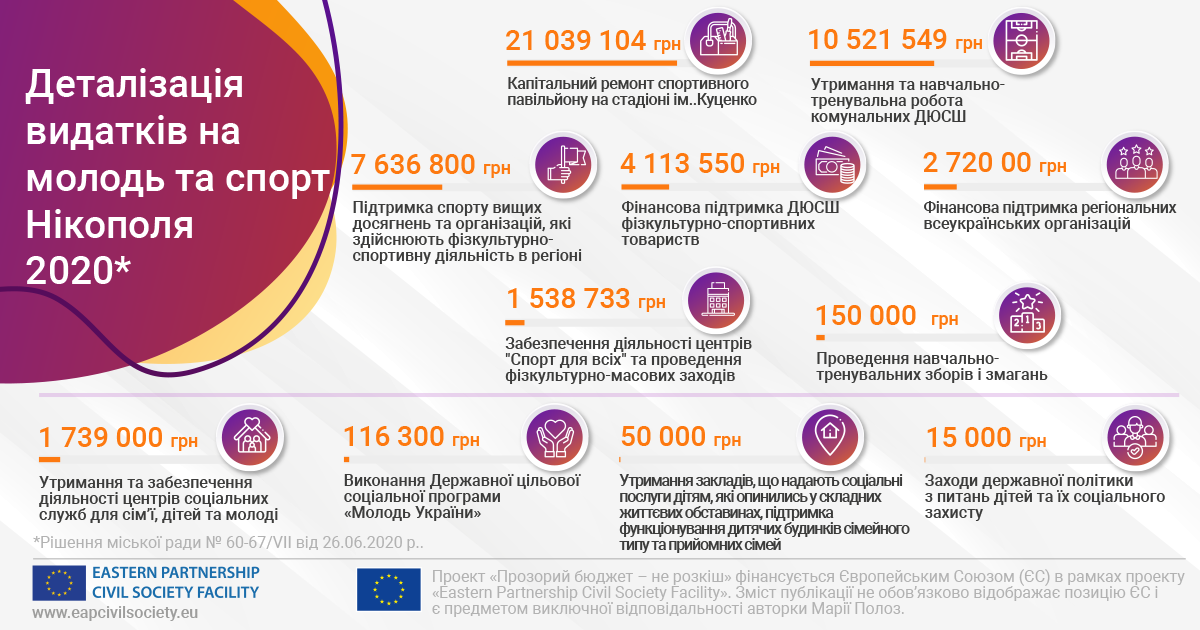
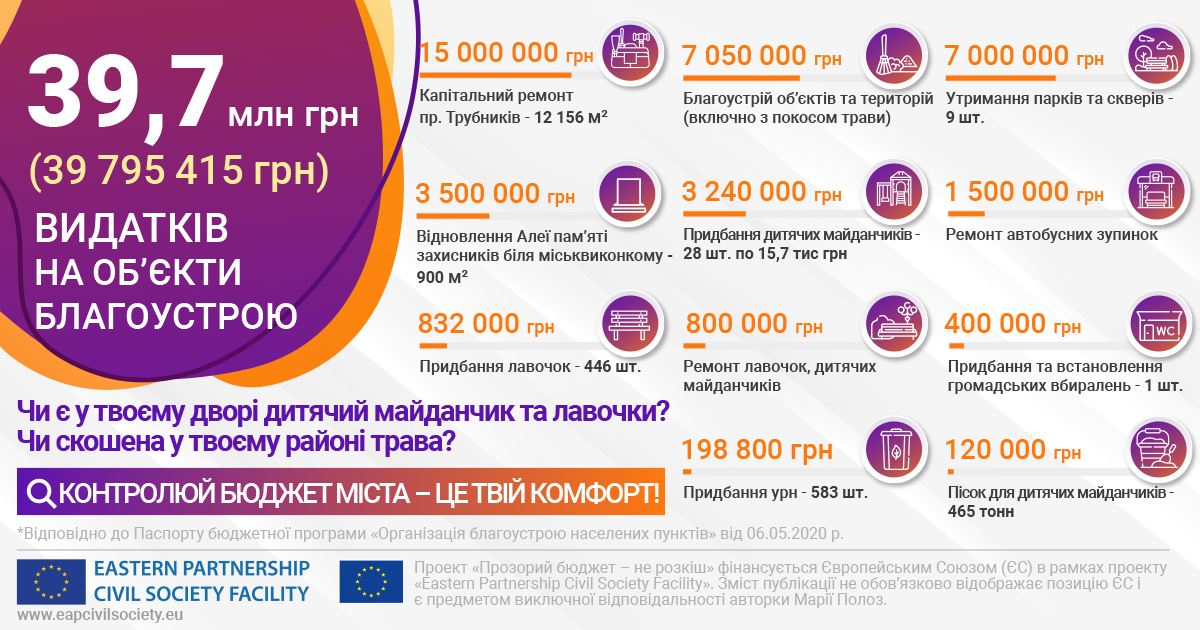
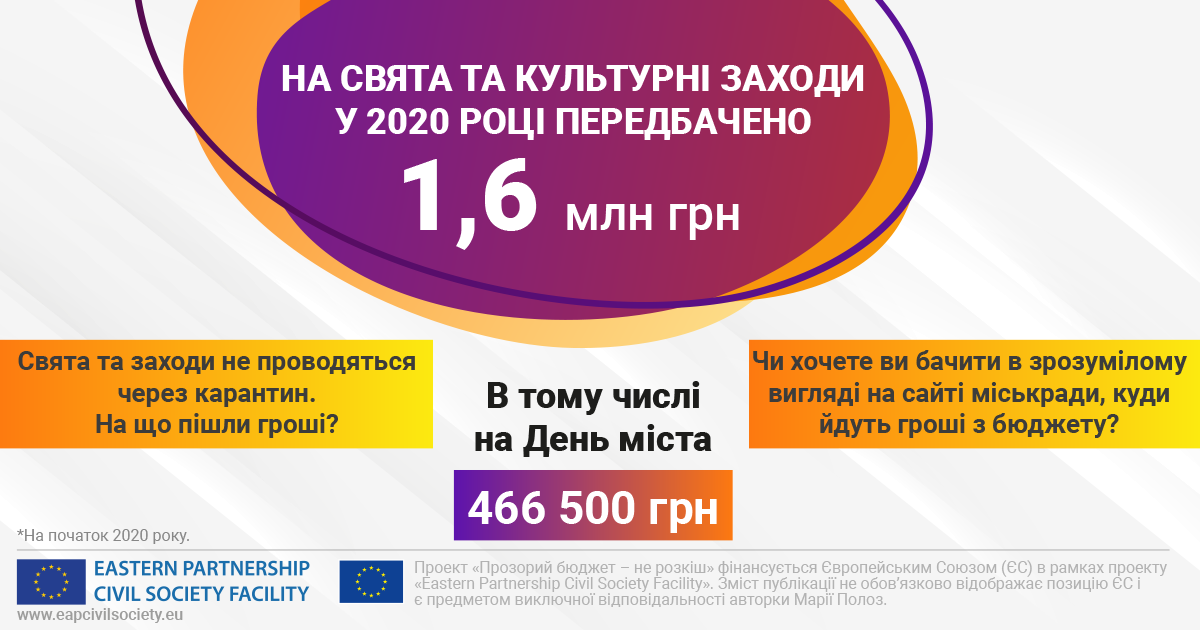
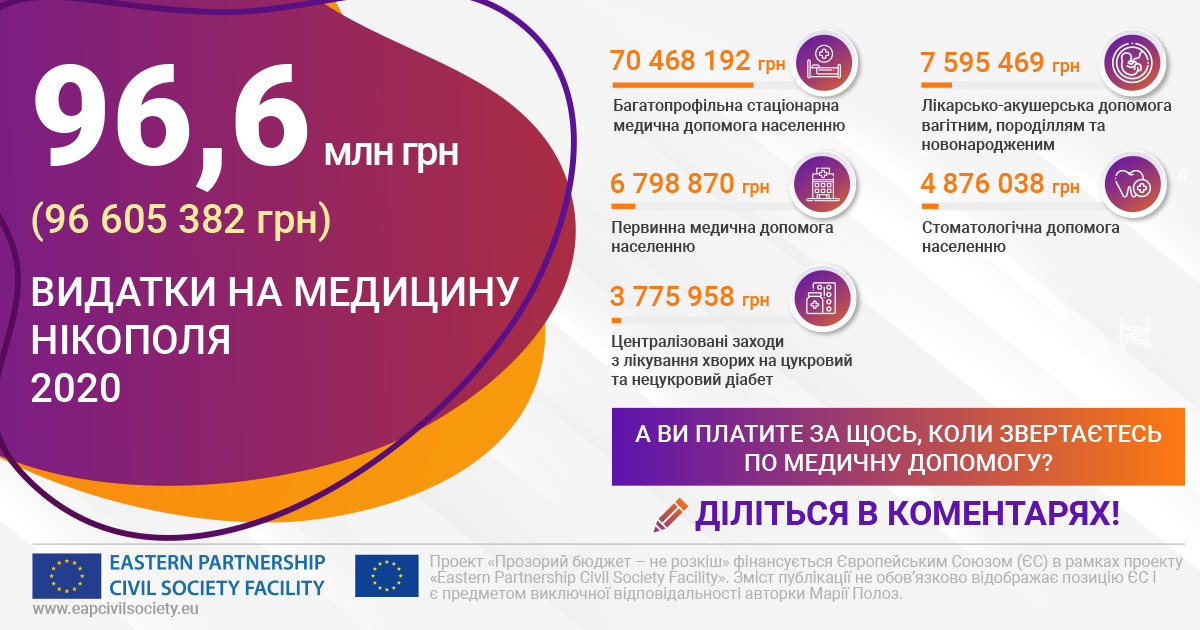
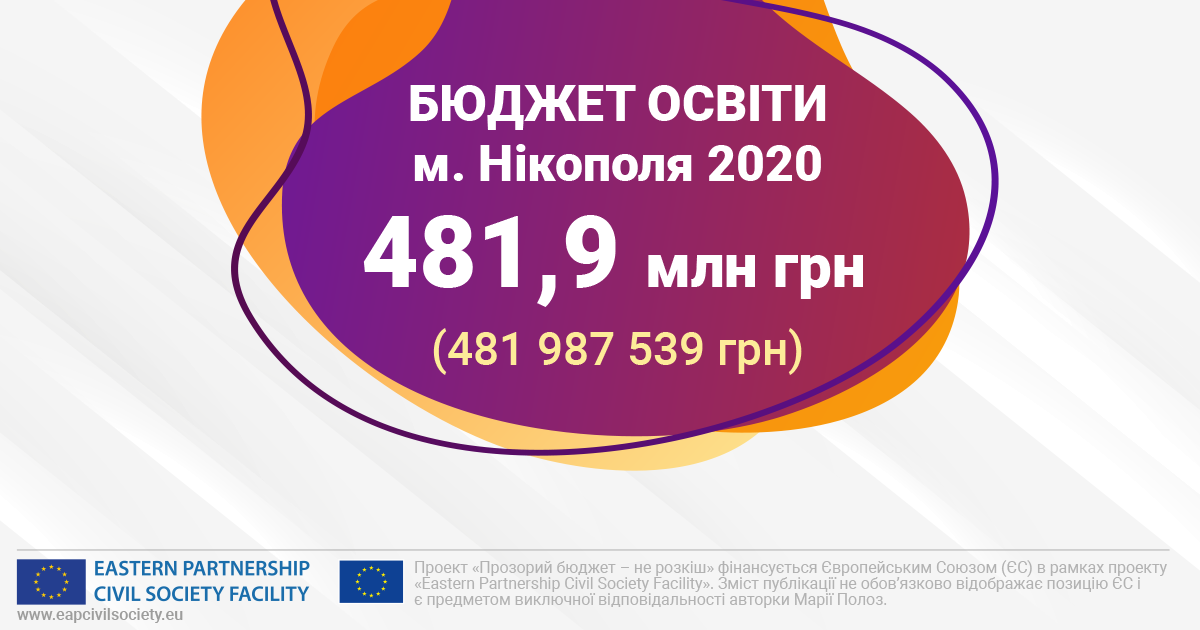
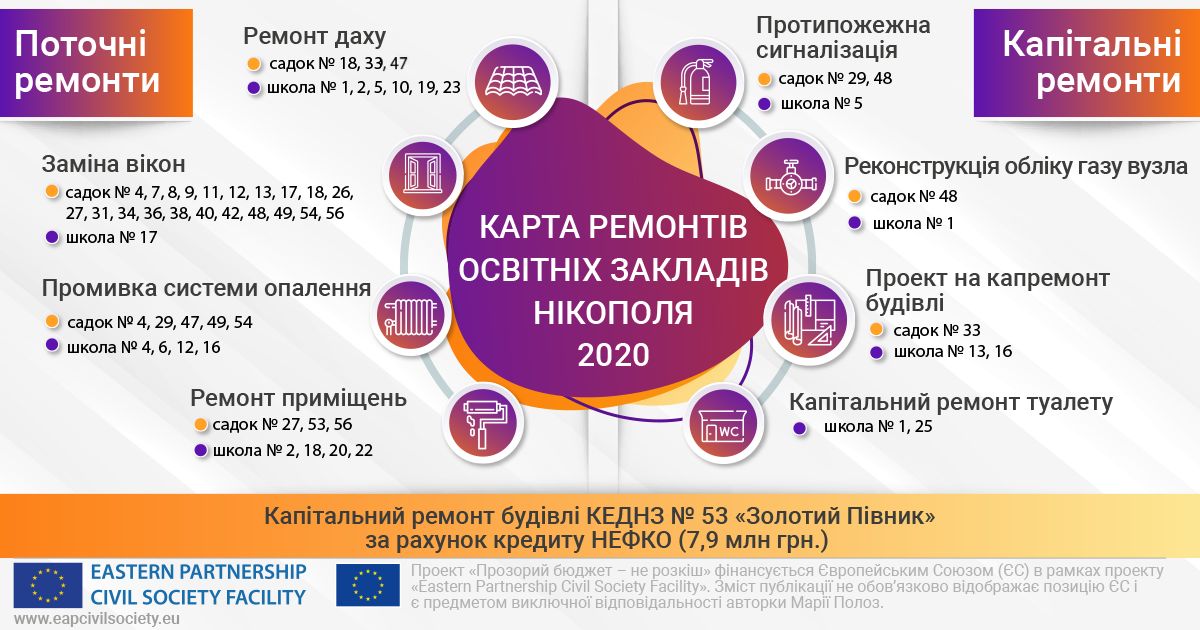
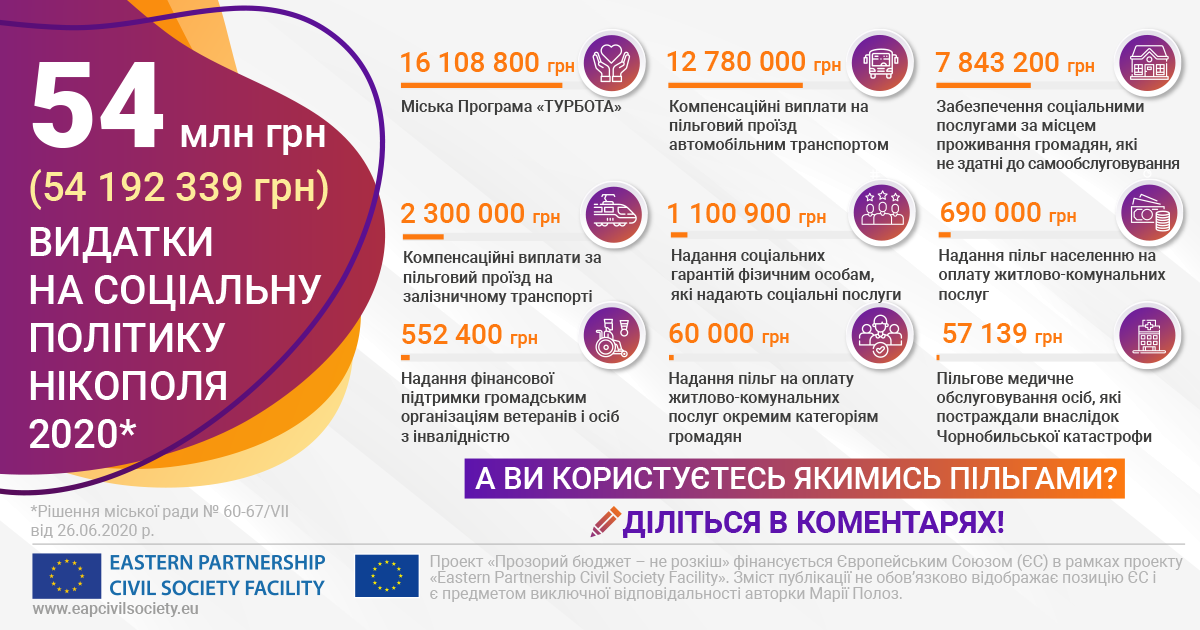
The action: Transparent Budget is not a Lux aimed to engage the citizens of Nikopol (a city in the Dnipropetrovsk Oblast of Ukraine) in monitoring the municipal budget and increase their participation on the local level. The action was implemented in three phases. First, Maria researched the municipal budget from the perspectives of education, healthcare, public expenditures and infrastructure (construction of roads and bridges). Following this, the project team organized awareness-raising campaigns and discussions; through the social media posts, publications and creative infographics, young people actively engaged in the discourse. At the last stage of the project, Maria organized awareness-raising training for the young leaders to advocate transparent budgeting tools and held a roundtable discussion engaging the project participants, local authorities, and representatives from the business & non-governmental sectors. The latter event served as a platform to collaborate with the decision-makers and share recommendations.
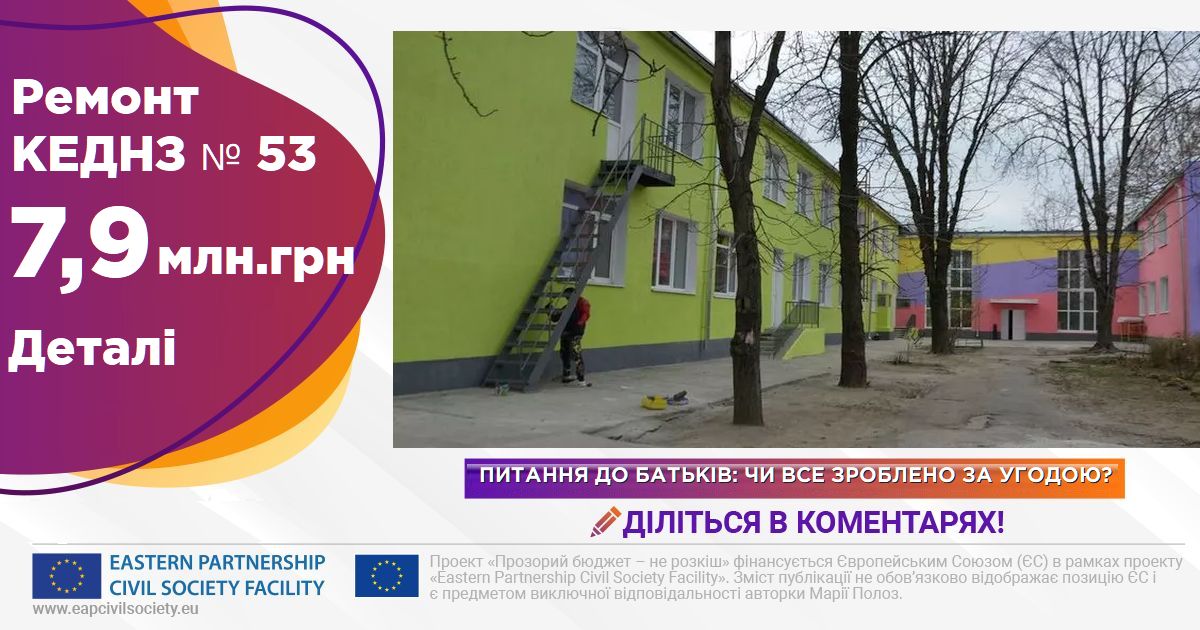
The project delivered the budget monitoring research document with a creative infographic on the municipal budget priorities of Nikopol City. Also, the action engaged 40 active young leaders and raised their awareness in participatory budgeting. As an outcome of the training, the participants developed 7 seed project initiatives on the topics of sports and rehabilitation centers, shelter for victims of domestic violence, workshops and education, etc. Also, through the visibility campaign, action reached nearly 161,452 people via social media channels; 60,000 local citizens via the outdoor advertisements, and 8,020 readers via the newspaper publications and informed them about the Nikopol budget expenditures. On top of that, the roundtable meeting facilitated dialogue among the stakeholders from the public, private and non-governmental sectors. All in all, the action contributed to increasing the transparency of the local government and the budget of Nikopol City due to the high public control.
Project leaflet:
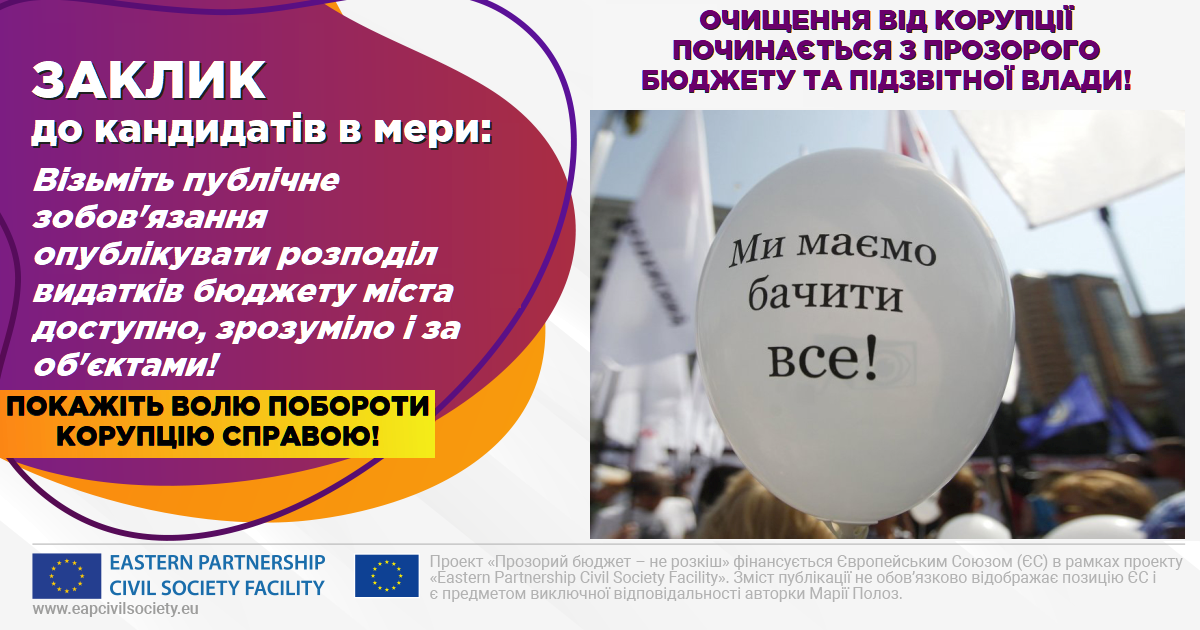
Project infographics:

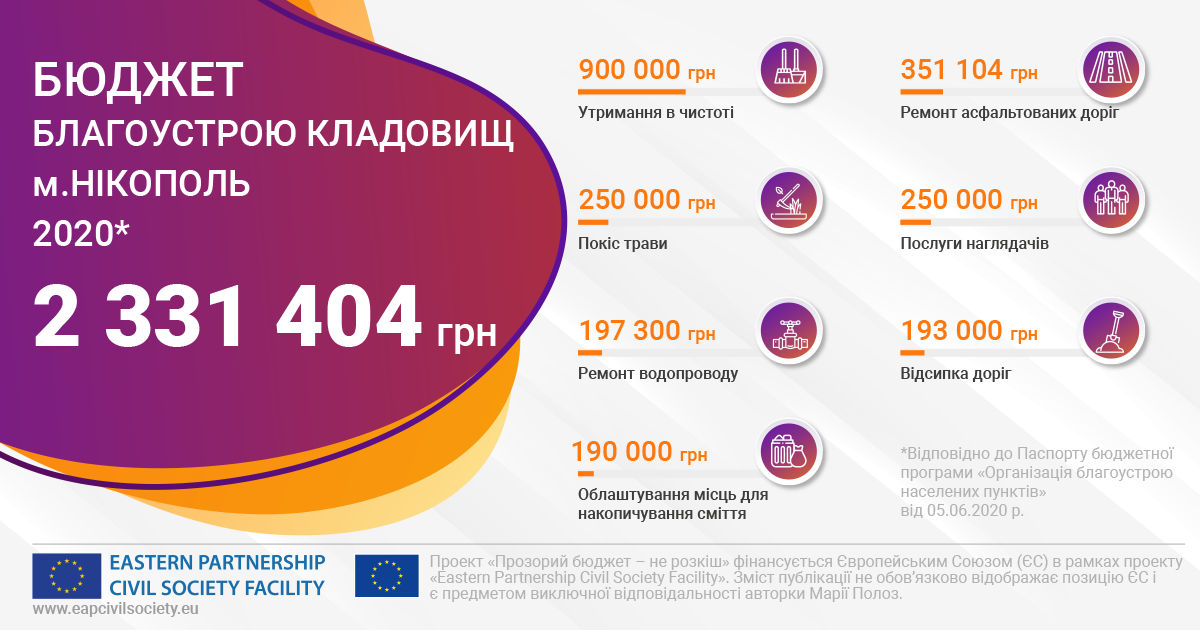
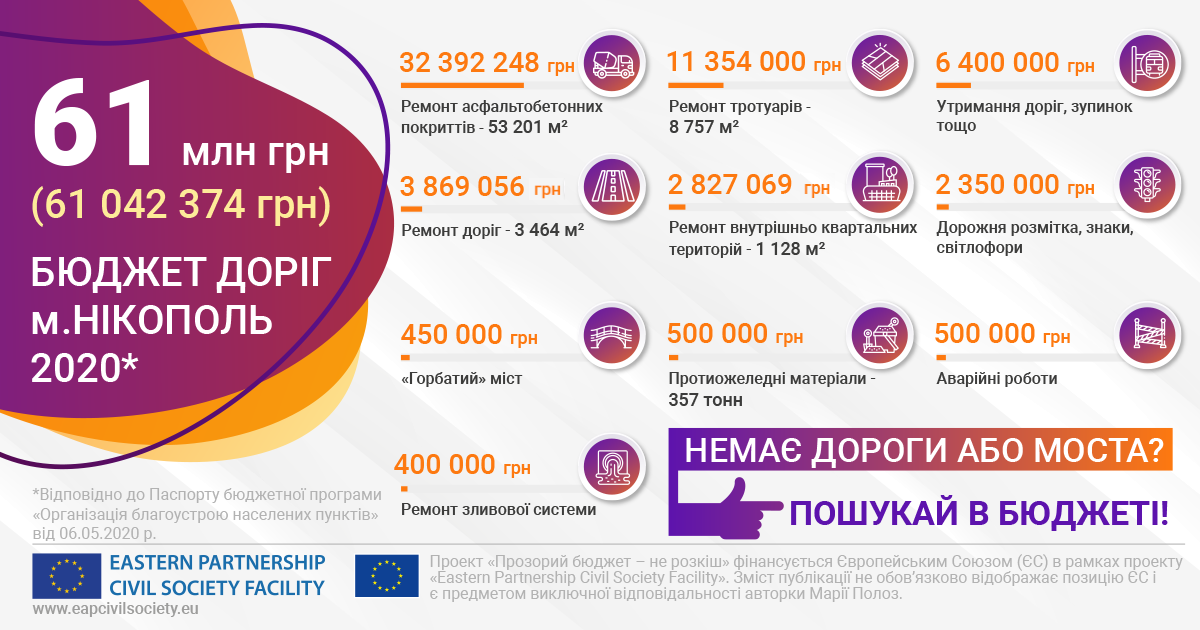
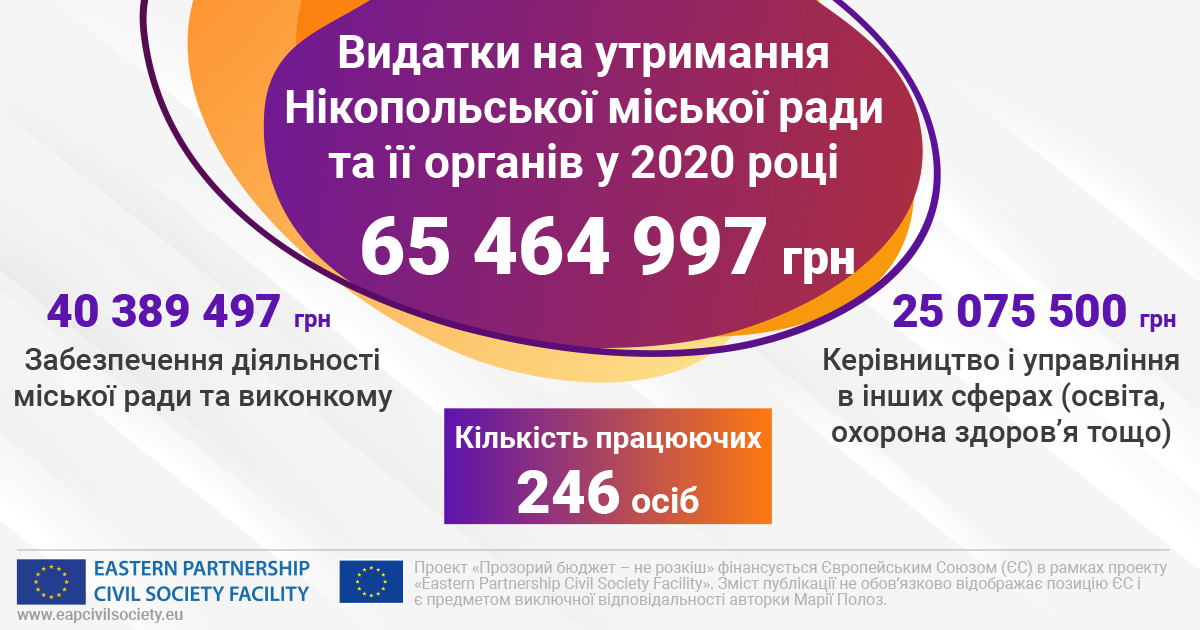
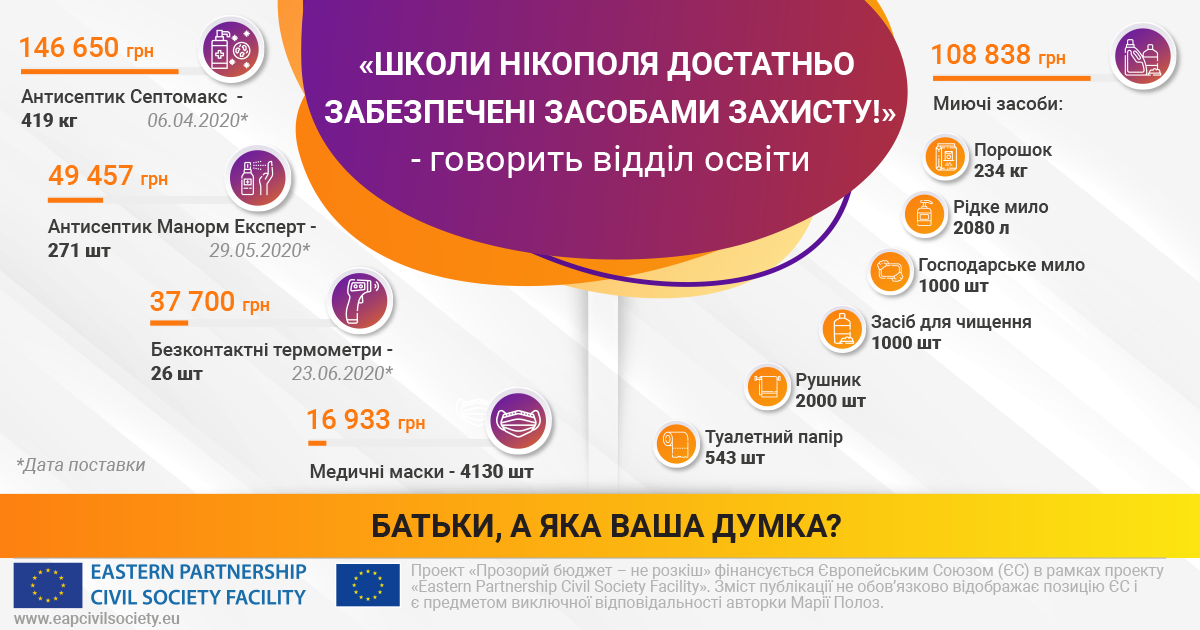
| Country | Ukraine |
| The scope of | |
| Type of solution | |
| The technology used | |
| The budget development decisions | 0 |
This Fellowship research project aimed to study the experience of pregnant women in maternal health care centers of Armenia and advance the implementation of an integrated person-centered model of obstetric care in the country. As a component of the United Nations 2030 Agenda and the Sustainable Development Goals (SDGs), this initiative can be exemplified by the Global Strategy for Women’s, Children’s and Adolescent’s Health 2016–2030 which has expanded the focus of its objectives to cover not merely the survival but also thriving of women and children so that they can achieve their full potential for health and well-being, and contribute to the transformative change envisioned in the SDGs. To promote higher quality obstetric services, Suren conducted research and pursued advocacy campaigns with his team. First, the gaps, inconsistencies, and violation of patients’ rights in the local hospitals were examined and the extent of person-centered maternity care during facility-based childbirth was assessed; then he prepared the summary of specific recommendations for the Ministry of Health and relevant organizations in the sector. Following this, Suren launched an advocacy campaign, trained the administration and staff members in all 12 maternity hospitals along with the validation of suggested recommendations, and disseminated research findings to the wider audience.
The project produced a research paper analyzing the data collected from 729 patients of all 12 health facilities of Yerevan delivering maternal care services. The project also facilitated high-level discussions on the challenges and solutions of advancing the integrated person-centered model of obstetric care in Armenia. As an advocacy campaign, Suren conducted 14 workshops in the sector organizations and the Ministry of Health, allowing him to raise the awareness of over 150 obstetric care providers, policy-makers, and health care planners in the field. The action overall promoted person-centered maternity care as a quality attribute of obstetric care delivery and suggested expertise-based recommendations to the relevant entities to advance the health, wellbeing, and human rights of women and children in the country.
| Country | Armenia |
| The scope of | |
| Type of solution | |
| The technology used | |
| The budget development decisions | 0 |
The project aimed to foster citizens’ engagement in the rural United Territorial Communities (Hromadas) and promote transparent land management in Ukraine. To achieve the above objectives, Oleksandra applied high-quality and user-center IT solutions & GIS technologies to the research and visibility campaigns. First and foremost, she created the opinion polls for Hromadas and researched the problems of AHs, data mining to explore the land management practices on the local level. Then, she mobilized the field experts and organized the online ideation to exchange expertise with the rural community. Finally, to increase the land management transparency, Olaksanda disseminated the results of the research and online webinars/ideathon with the local people and the decision-makers.
The action raised awareness of the local authorities and civil activists from more than 150 rural areas of Ukraine. Also, the project delivered a research document and opinion poll summary to enhance citizens’ access to information about the effective management of land resources. Within the frame of the fellowship, Oleksandra created a Facebook network of the Project Ambassadors unifying the community representatives and experts in one group. To disseminate the project deliverables and reach a larger audience, she developed an online course comprising 8 educational webinars and engaging more than 900 participants. On top of that, the project created a map of good practices for better engagement and facilitated the dialogue between the local community and the authorities via sharing the recommendations based on the results of the online ideathon, research & opinion poll summary, webinars and joint action plan.
Project website: Transparent Lands with the Map of good practices for the better engagement and educational video lectures.
Research Paper (in Ukrainian):
Project in media:
Залучення громадян для управління земельними ресурсами у громадах – результати дослідження
| Country | Ukraine |
| The scope of | |
| Type of solution | |
| The technology used | |
| The budget development decisions | 0 |